

Is Hopkins Good for Eco Travelers? A Belize Look

The first sound you may notice in Hopkins is not traffic. It is the Caribbean moving against the shore, joined by birds calling from palms and the distant rhythm of village life. So, is Hopkins good for eco travelers? Yes - especially for travelers who want Belize to feel lived in, wild, and personal rather than packaged behind resort gates.
Hopkins is a small Garifuna village on Belize’s southeastern coast, where beach days, local culture, and rainforest adventures can belong to the same trip. Its appeal is not about checking off the most attractions in the shortest time. It is about choosing a slower base, spending thoughtfully, and making room for the natural places that give Belize its character.
Why Hopkins Works for Nature-Minded Travelers
Eco travel means different things to different people. For some, it means staying close to protected landscapes. For others, it means supporting locally rooted businesses, reducing unnecessary transfers, eating locally, and choosing experiences that respect wildlife. Hopkins can make all of those choices easier, though it is not a destination where sustainability happens automatically.
The village sits within reach of some of southern Belize’s most rewarding natural areas. The Cockscomb Basin Wildlife Sanctuary, known for its forested trails, rivers, waterfalls, and extraordinary birdlife, is a natural fit for hikers and wildlife lovers. Mayflower Bocawina offers another rewarding inland day, with jungle paths, swimming holes, and the feeling of stepping beneath a deep green canopy. Offshore, the Belize Barrier Reef creates opportunities to snorkel and visit marine environments that deserve care as much as admiration.
The setting also makes a lower-rush itinerary possible. Rather than changing hotels every other night to see coast, jungle, and culture, travelers can settle in near Hopkins and take well-planned day trips. Fewer packing days and fewer long transfers leave more time to notice the place itself: a heron lifting from a creek, a passing bicycle on a village road, the evening chorus beginning after rain.
A Village, Not a Theme Park
Hopkins is not a polished, all-inclusive resort strip. That is one of its strengths, but it is also a practical distinction to understand before booking. Roads can be uneven, schedules may feel more relaxed than visitors from the US expect, and choices for dining or nightlife are more limited than in a larger beach town.
For many eco-conscious travelers, those trade-offs are part of the reward. Hopkins has a real community rhythm and a strong Garifuna identity, expressed through food, music, language, and welcoming local businesses. A respectful visit means treating the village as a home, not a backdrop. Ask before photographing people, learn a little about Garifuna culture, and leave space in your plans for locally owned restaurants, guides, and craftspeople.
Is Hopkins Good for Eco Travelers Seeking Wildlife?
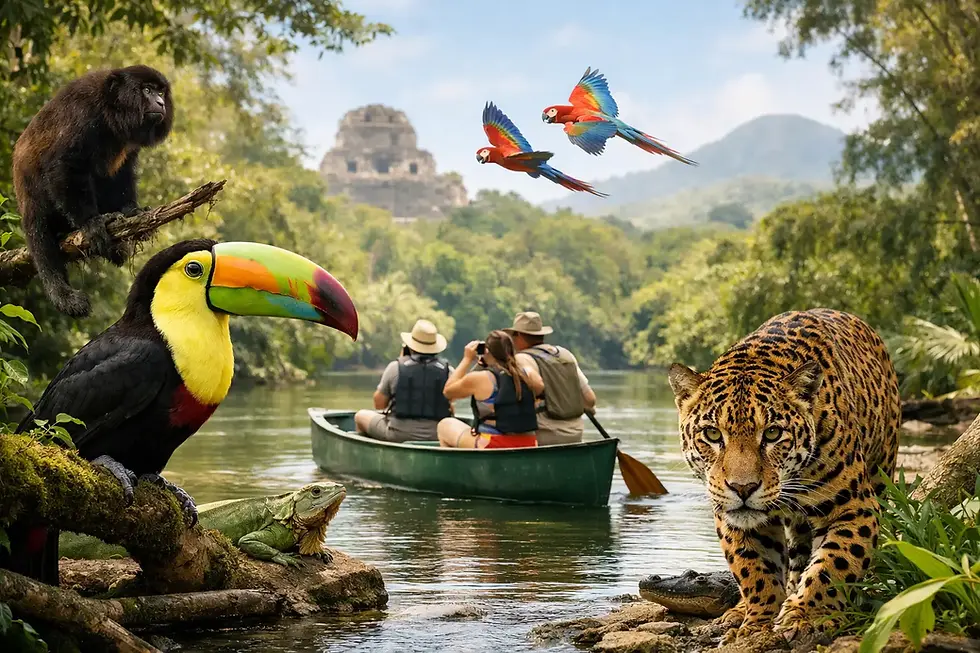
It can be excellent, particularly if your idea of wildlife includes more than a single headline animal. Southern Belize holds remarkable variety: tropical birds, howler monkeys, iguanas, butterflies, reptiles, and marine life. Sightings are never guaranteed, and that uncertainty is part of responsible nature travel. Wild animals should not perform on cue.
Birders often find the region especially compelling. Coastal scrub, mangroves, broadleaf forest, creeks, and nearby foothills create a rich mix of habitats. Early mornings are best, when the air is cool and the forest feels most awake. Bring binoculars, move quietly, and choose guides who prioritize observation over chasing a sighting.
Cockscomb Basin is often a highlight for visitors hoping to experience Belize’s inland wilderness. It is associated with jaguar conservation, though seeing a jaguar is exceptionally rare. Go for the rainforest itself: the layered canopy, fresh streams, vivid fungi after wet weather, and the chance to encounter wildlife on its own terms. A good guide can turn what seems like an empty trail into a story of tracks, calls, plants, and animal behavior.
The coast deserves the same care. When snorkeling or visiting reef areas, never touch coral, stand on the reef, or feed fish. Use sun protection chosen with marine health in mind, and follow your guide’s instructions on distances and conditions. The reef is beautiful because it is alive and fragile, not because it is an underwater attraction built for visitors.
Choosing a Stay That Supports the Experience
Where you stay shapes the footprint and feeling of your trip. A large beachfront property may be right for travelers seeking constant activity and easy access to services. But if your goal is quiet, birdlife, and a more intimate connection to southern Belize, a small jungle accommodation outside the village can offer a different kind of comfort.
Look for lodging that makes it possible to rest without disconnecting from the environment. Screened porches, natural shade, well-kept grounds, kitchens for a few self-catered meals, and thoughtful cooling can make a substantial difference in the tropics. Privacy matters too. After a day hiking through humid forest or snorkeling in the sun, there is real value in returning to a peaceful place where you can hear the night insects rather than a crowded pool deck.
Freshwater Creek Cabanas offers that quieter rhythm near Hopkins, with private cabins tucked among ancient hardwoods, tropical birds, and creekside scenery. It is a particularly comfortable choice for couples, small families, and birders who want jungle immersion along with practical touches such as air conditioning, screened spaces, and equipped kitchens.
An eco-minded stay is also about behavior after check-in. Conserve water, turn off air conditioning when you leave, use refillable bottles, and avoid treating daily linen changes as a vacation entitlement. Small decisions matter most when they are repeated by many guests.
Plan Adventures With Care, Not Just Ambition
The most rewarding Hopkins itineraries leave room to breathe. A morning of birdwatching, a village lunch, and an unhurried afternoon on the beach can be as memorable as a full-day excursion. Trying to do reef snorkeling, cave tubing, ruins, waterfalls, and wildlife sanctuary trails in three days usually means spending more of your trip in transit than in nature.
Choose a few experiences that match your interests and the season. Rain can transform jungle trails into lush, muddy, sensory places, while dry periods can make hiking and road travel easier. Sea conditions affect snorkeling and boat outings. Local guides and hosts can help you set realistic expectations instead of promising perfect weather or guaranteed sightings.
When booking tours, ask useful questions. How large are the groups? Are guides local? How are wildlife encounters handled? Does the operator provide reusable water options or encourage guests to bring their own? These details reveal more than broad claims about being green.
Transportation deserves some planning as well. Belize is not enormous, but travel times can be longer than a map suggests. Combining regional shuttle transportation with a few carefully chosen tours can reduce stress and prevent the temptation to rent a vehicle for every outing. If you do drive, go slowly through villages, watch for pedestrians and animals, and avoid idling while you wait.
The Best Hopkins Trip Has a Lighter Pace
Hopkins is best for eco travelers who are willing to exchange polished predictability for a deeper sense of place. It offers genuine access to coast and rainforest, a meaningful cultural setting, and enough comfort to make the experience restorative rather than roughing it. It may not suit visitors who want luxury shopping, nonstop nightlife, or a tightly choreographed resort vacation.
Come with curiosity, patience, and a little flexibility. Buy from local businesses, carry out what you carry in, keep a respectful distance from wildlife, and let the pace of the village reset your own. Leave an open morning in your plan for the birds, the breeze, and whatever Belize chooses to reveal.


Comments