

Belize Birdwatching Guide for a Wild, Quiet Stay

The first call may arrive before sunrise: a Great-tailed Grackle from the clearing, a kiskadee from the creekside, then the rising, whistled chorus of a jungle waking up. This Belize birdwatching guide is for travelers who want more than a checklist. It is for those who want to slow down, learn a landscape by sound and color, and return from a morning walk with muddy shoes, a full heart, and a few remarkable birds still on the mind.
Belize is small enough to explore without spending every day in transit, yet varied enough to reward patient birders with an extraordinary range of habitats. Caribbean coast, broadleaf forest, pine savanna, lagoons, rivers, and highland foothills all sit within reach. Around Hopkins, the meeting of coast and jungle makes it especially easy to pair peaceful lodging with rewarding days in the field.
Why Belize Rewards Patient Birders
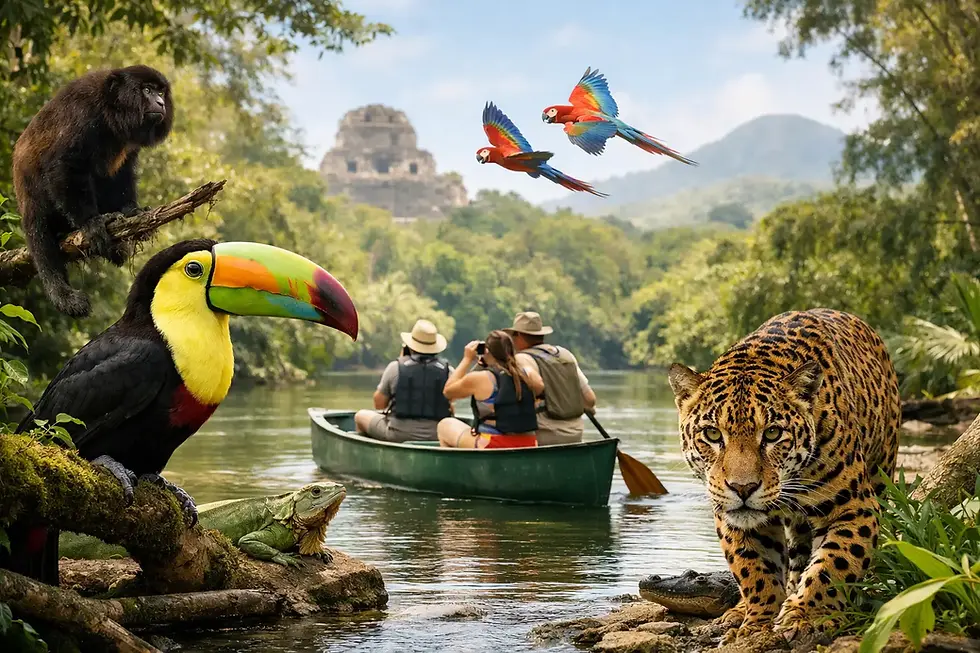
Belize has recorded more than 590 bird species, from familiar North American migrants to resident tropical specialties that can feel almost unreal on a first sighting. A single trip can bring Keel-billed Toucans in the canopy, Black-headed Trogons along a shaded trail, Rose-throated Tanagers in fruiting trees, and Magnificent Frigatebirds drifting above the coast.
The real pleasure is the variety. Dawn in lowland forest is a different world from a late afternoon beside a lagoon. In the forest, birds can be close but concealed, their presence announced by a wing flick, a falling call, or a patch of red in dense green. Along open water, patience often produces clearer views of herons, kingfishers, raptors, and waterbirds.
Birding here also asks for a shift in pace. Tropical forest is not always a place for rapid sightings. Some mornings are wonderfully active; others reward stillness, listening, and looking twice at the same branch. That is part of the experience. A local guide can make a tremendous difference, especially with calls and the subtle movements of canopy birds, but independent birders can have satisfying mornings as well when they give themselves enough unhurried time.
The Best Birdwatching Habitats Near Hopkins
Hopkins offers a welcome balance for nature-focused travelers: village culture and Caribbean shoreline nearby, with forested reserves and inland trails within easy reach. Rather than choosing between beach time and birding, you can let the day hold both.
Creekside Forest and Jungle Gardens
The habitat around a quiet jungle property can be productive before you have even set out for a formal tour. Flowering and fruiting trees draw hummingbirds, tanagers, orioles, and flycatchers. Forest edges can produce Social Flycatchers, Lineated Woodpeckers, and the bold calls of aracaris, while shaded areas may reveal wrens, warblers, and insect-hunting birds moving through the understory.
This is the best place to begin gently. Bring coffee to a screened porch before sunrise, keep binoculars nearby, and let the first hour of daylight come to you. At Freshwater Creek Cabanas, the setting among ancient hardwoods, tropical birds, and creekside scenery makes this quiet first watch part of the stay rather than another item on an itinerary.
Cockscomb Basin Wildlife Sanctuary
Cockscomb Basin is well known for its rainforest, mountain views, and wildlife, and its trail network also makes it one of the most rewarding birding destinations in southern Belize. The mix of foothill forest, rivers, and open areas supports a rich variety of species. Listen for trogons and motmots in the shade, watch for toucans overhead, and scan sunny openings for raptors circling above the ridge.
Conditions matter here. After rain, trails can be muddy and birds may be quieter during a heavy downpour, though the forest often comes alive again when the weather lifts. Start early, wear shoes with grip, and do not rush through the first wooded stretch. Bird activity is often strongest before the heat builds.
Mayflower Bocawina and Southern Foothills
Mayflower Bocawina National Park combines broadleaf forest, waterfalls, and archaeological interest in a setting that feels deeply tucked into the landscape. The trail margins can be particularly rewarding because they offer light, fruiting vegetation, and a clearer view into the lower forest than the densest jungle.
This is a good choice for travelers who want a more active birding day. A hike can be paired with birdwatching, but expectations should be realistic: the steeper or faster the hike, the fewer birds you may notice. Birders who prioritize sightings should allow extra time near the trailhead, along quieter stream sections, and wherever mixed feeding flocks begin to gather.
Lagoons, Rivers, and the Caribbean Coast
Open water changes the cast of birds completely. Along the coast and nearby wetlands, look for Brown Pelicans, egrets, herons, terns, and Ospreys. Kingfishers may flash low over rivers, while mangrove edges can hold smaller, easily overlooked species.
Early morning and the softer light before sunset are ideal for this habitat. Midday can still be worthwhile for soaring birds, but heat shimmer and strong sun make identification harder. A slow boat outing can offer excellent access, although shore-based watching is often just as rewarding for travelers who prefer a quiet, low-key morning.
When to Go Birdwatching in Belize
Belize is a year-round birding destination, but the character of a trip changes with the season. The dry season, generally from late November through April, is often easier for travelers who prefer firmer trails and more predictable weather. It also coincides with the presence of many wintering North American migrants, adding warblers, vireos, and other familiar-yet-welcome birds to the resident species.
The greener months from roughly May through October bring rain, lush vegetation, and dramatic forest energy. Afternoon showers are common, so early starts become even more valuable. Some roads and trails can be muddier, and humidity is higher, but this can be a beautiful time for travelers who appreciate fewer crowds, vivid landscapes, and the full sound of the jungle.
For photography, light may matter as much as season. Aim for the first two to three hours after sunrise or the last stretch before sunset. Cloudy mornings can be excellent in forest habitats because shadows are softer and birds often remain active longer.
Field Tips for a Better Belize Birdwatching Experience
The most useful piece of equipment is a pair of binoculars you already know how to use. An 8x or 10x pair works well for most travelers. A small field notebook or birding app can help with memories and identification, but resist the urge to spend every moment looking at a screen. In a place where birds are often heard first, your ears are as valuable as your eyes.
Dress for warmth, insects, and sudden rain. Lightweight long sleeves, breathable pants, a brimmed hat, water, and rain protection go a long way. Neutral colors are helpful in the forest, though comfort matters more than looking perfectly camouflaged. Use insect repellent thoughtfully, especially before entering wooded trails.
Four habits make a noticeable difference:
Arrive before sunrise and stay still for the first few minutes.
Learn a handful of common calls rather than trying to memorize everything at once.
Watch fruiting trees, flowering shrubs, river edges, and breaks in the canopy.
Keep your distance from nests, feeding birds, and any species that appears stressed by your presence.
A guide is particularly valuable if you have limited time, want help finding regional specialties, or are new to birding by ear. Independent walks are ideal for travelers who want space to linger, photograph, or simply enjoy the morning without a schedule. Many of the best trips include both: a guided forest outing for local knowledge, then relaxed observation from your lodging.
Birding With Respect for Belize’s Wild Places
The birds are only there because the habitat remains alive. Keep trails clean, avoid playing calls to draw birds close, and never feed wildlife for a photograph. When watching from a village road, riverbank, or private property, be mindful of local life and ask before entering areas that are not clearly public.
Eco-conscious travel is not about sacrificing comfort. It is about choosing experiences that leave room for the landscape to remain what drew you there in the first place. A peaceful cabin, a local guide, a carefully planned transfer, and a slower itinerary can reduce unnecessary pressure while making the journey feel more personal.
Bring your binoculars to breakfast, leave one morning unscheduled, and listen closely after the rain. In Belize, some of the most memorable sightings happen not at the end of a trail, but in the quiet space where the jungle meets tranquility.


Comments